
Pros and Cons: What Are the Key Differences Between an ATV and SxS/UTV?
Which Off-Road Vehicle is Right for Your Next Adventure?
Which Off-Road Vehicle is Right for Your Next Adventure?
Choosing your first off-road vehicle can be daunting. The market is dominated by two main types of machines: the All-Terrain Vehicle (ATV), often called a quad or four-wheeler, and the Side-by-Side (SxS), which is generally considered to have two categories: Utility (also known as a UTV) and Sport (or Performance).
While both ATVs and SxSs are built for conquering rough terrain, they offer fundamentally different riding experiences, capacities, and capabilities. Understanding these distinctions is the first step toward finding the perfect machine for your needs, whether you're focused on trail thrills, utility work, or family fun.
What is an ATV?
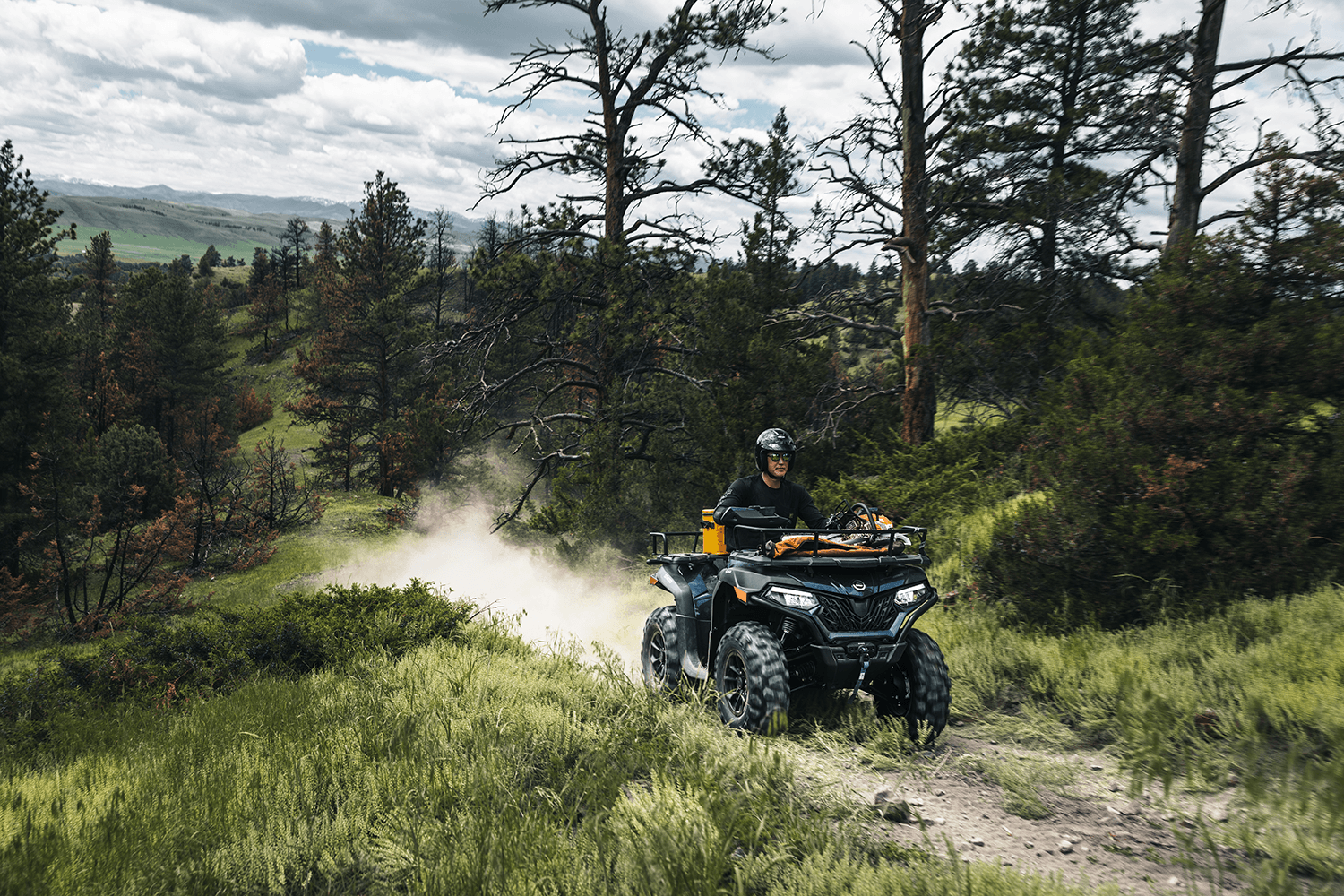
An All-Terrain Vehicle (ATV), commonly referred to as a quad, four-wheeler, or sometimes a quad bike, is an off-road vehicle designed to handle a wide variety of terrain. By definition, the rider sits astride the machine, using motorcycle-style handlebars for steering and control. ATVs typically feature a single-rider seat (though "two-up" or touring models are available for a second passenger) and are highly prized for their relatively small size and high maneuverability. This combination allows riders to navigate extremely tight, technical trails that larger vehicles cannot access.
What is a Side-by-Side?
A Side-by-Side (SxS) gets its name from the fact that the driver and passenger sit next to each other, side-by-side. Unlike ATVs, SxS vehicles feature an automotive-style configuration, including a steering wheel, foot pedals, and bucket or bench seats. They are equipped with a Roll Over Protection System (ROPS) cage and seatbelts for enhanced occupant safety. The term "Side-by-Side" is the umbrella term that includes both utility- and work-focused UTVs and high-performance, sport-focused recreational SxS machines.
What is a UTV?
UTV stands for Utility Task Vehicle. This term describes a type of Side-by-Side (SxS) that is primarily engineered for work. UTVs are tough, durable machines built with robust towing and hauling capabilities. They often feature large, reinforced cargo beds, higher payloads, and sometimes heavier-duty suspension components than their sport-focused counterparts. If you see a machine on a farm, ranch, or construction site being used to carry tools, tow equipment, or transport a work crew, it is most likely a UTV.
Are All SxSs Considered UTVs?
No, not all Side-by-Sides are considered UTVs, although the terms are often used interchangeably in casual conversation.
In short, a UTV is a type of Side-by-Side, but a high-performance sport machine is a Side-by-Side, not typically a UTV.
The comparison starts with design, moving through how you ride the machine and what you can carry.
The Design and Riding Experience
Size, Maneuverability, and Utility
Comparing Costs: Are ATVs or SxSs/UTVs More Expensive?
Generally speaking, ATVs are less expensive than SxS/UTVs.
Since ATVs are mechanically simpler, smaller, and have fewer components (no full cab, roll cage, steering wheel, or large cargo bed), their starting prices are typically significantly lower. Check out our full ATV Buyer’s Price Guide for more information if you’re in the market to purchase.
Side-by-Sides, on the other hand, are larger, heavier, and more complex. They have a greater seating capacity, larger engines (on average), and more sophisticated suspension systems to handle the increased weight and passenger loads. As a result, even entry-level SxSs/UTVs often start at a higher price point than mid-range ATVs.
In short, if you need multi-passenger capacity and heavy utility, the higher cost of an SxS/UTV is an investment in capability.
Pro Tip: Don’t Forget to Look Beyond the MSRP “Sticker” Price
The cost comparison between machines is less about the sticker price and more about the value of included features and your specific needs. While a competitor's MSRP might seem low, you often have to pay extra for:
To help narrow your choice, consider your primary use case:
Which Brand of ATVs and SxSs/UTVs Is Best?
Once you've decided on purchasing an ATV vs an SxS/UTV, the next step is choosing a brand. This is where you encounter the hidden costs of off-roading, no matter the vehicle type. Many manufacturers list an attractive base price, but that machine comes stripped down. Features that make a machine truly capable–like a winch, power steering, or high-quality wheels–are typically added as expensive options, rapidly driving up the final cost.
The CFMOTO Difference: More Standard Features Included
At CFMOTO, we challenge that model by delivering the highest-performing, most feature-rich vehicles with the best standard equipment package in the industry.
We believe the essential gear for work and play should be included, which is why a CFMOTO ATV (CFORCE Series) or SxS/UTV (Sport ZFORCE & Utility UFORCE Series) represents the best overall value on the market. When you compare the final "out-the-door" price, a CFMOTO model comes standard with equipment that would cost you thousands extra on competitors’ models.
Ready To See the Difference In-Person?
Don’t take our word for it. Check out each of these types of off-road vehicles by visiting a CFMOTO dealer in-person or checking out local inventory near you. You can use our dealer locator to find a dealer near you today.